The Palace Museum (Forbidden City)
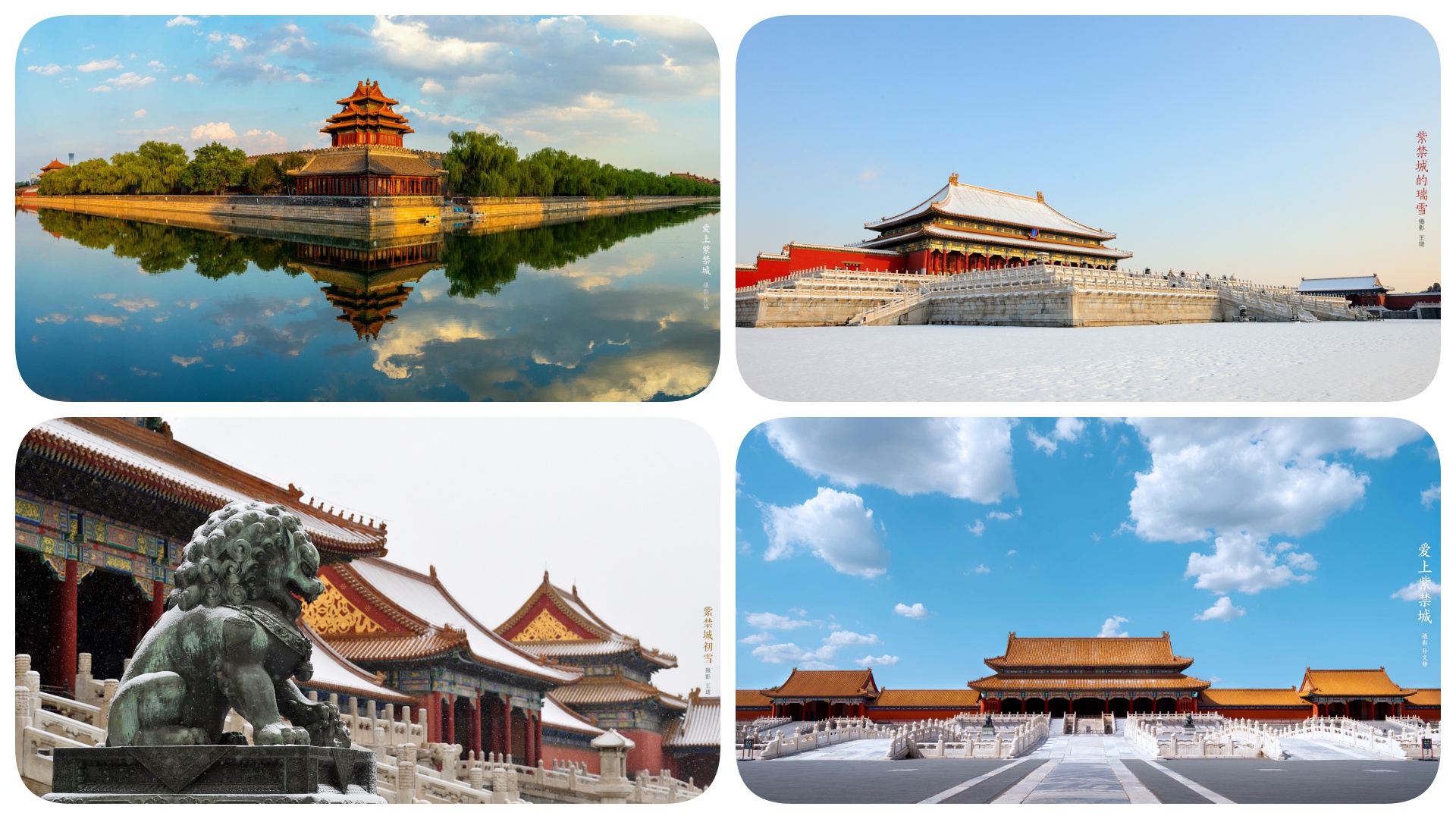
The Palace Museum, historically known as the Forbidden City, stands as the world's largest and best-preserved imperial palace complex. Constructed between 1406 and 1420 during the Ming Dynasty under Emperor Yongle, it served as the imperial residence and political center for 24 emperors of the Ming (1368-1644) and Qing (1644-1911) dynasties over nearly 500 years. Covering 72 hectares with 980 surviving buildings and approximately 9,000 rooms, the complex exemplifies traditional Chinese architectural principles, including strict adherence to feng shui and hierarchical spatial organization.
Divided into the southern "Outer Court" (administrative center) and northern "Inner Court" (residential quarters), the Palace Museum features iconic structures such as the Hall of Supreme Harmony (the highest-ranking imperial building), the Hall of Central Harmony, and the Hall of Preserving Harmony. The entire complex is enclosed by a 10-meter-high wall and a 52-meter-wide moat, symbolizing imperial authority and protection.
Today, as one of the world's most visited museums, it houses over 1.86 million cultural relics, including imperial treasures, ancient paintings, calligraphy, porcelain, and bronze artifacts, representing the pinnacle of Chinese art and craftsmanship across dynasties. The Palace Museum continues to be a center for cultural research and international exchange, hosting academic conferences and collaborative projects with institutions worldwide.
For more information: https://intl.dpm.org.cn/index.html?l=en
Mutianyu Great Wall
The Mutianyu Great Wall represents the architectural essence of the Ming Dynasty Great Wall and is widely recognized as one of its most spectacular and well-preserved sections. Initially constructed during the Northern Qi Dynasty (550-577 AD), it was rebuilt and expanded in 1404 by General Xu Da during the early Ming Dynasty and later reinforced by the renowned military strategist Qi Jiguang.
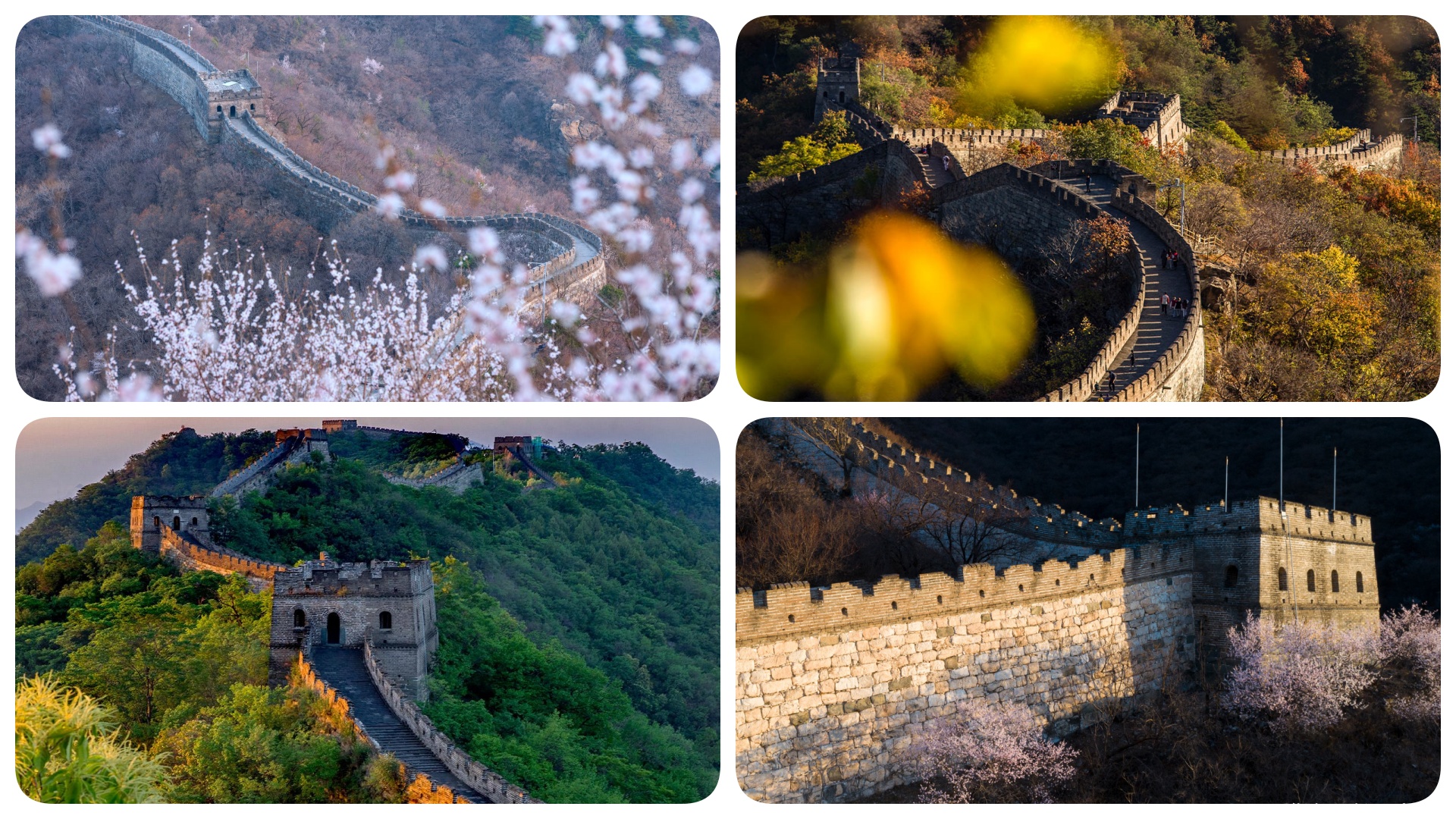
Stretching 5.4 kilometers along a dramatic mountain ridge, this section features 23 densely distributed watchtowers, including the unique "Zhengguantai" triple watchtower complex—an architectural rarity among Great Wall sections. The wall's construction employs high-quality gray bricks and stone slabs, with sophisticated defensive systems including crenellations, parapets, and secret passages for troop movement.
What distinguishes Mutianyu is its exceptional integration of natural beauty and military architecture, boasting a 96% forest coverage rate that creates stunning seasonal landscapes: blooming flowers in spring, lush greenery in summer, vibrant autumn foliage, and snow-covered peaks in winter. As a preferred venue for international dignitaries (hosting over 100 state leaders including Bill Clinton and Gerhard Schröder), Mutianyu offers a perfect balance of historical significance and natural splendor.
For more information: https://en.mutianyugreatwall.com
The Zhejiang Provincial Museum
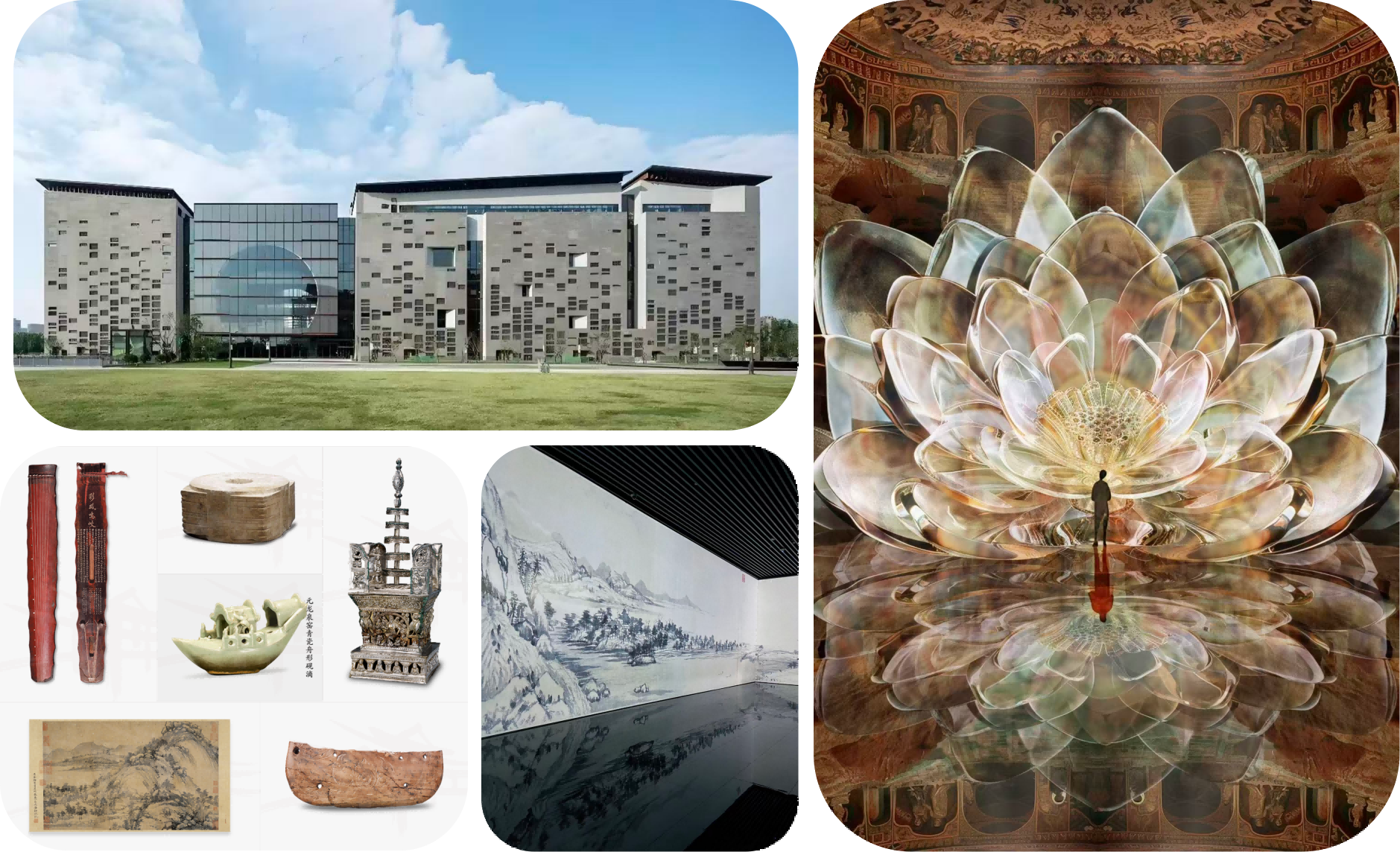
The Zhejiang Provincial Museum (Zhijiang Branch) is located in the Zhijiang Cultural Center in Hangzhou. With a floor area of 100,000 square meters, an exhibition space of 32,012 square meters, and a building height of 59.9 meters, it is the largest building in the Zhijiang Cultural Center by single-building floor area, and a modern public cultural space that integrates collection, preservation, research, exhibition, publicity, education, and cultural experience. The exhibition planning of the new Zhijiang branch adheres to the principles of "depth of thought, academic rigor, and humanistic warmth," and has developed a diverse "159" exhibition system. The chronological exhibition "10,000 Years of Zhejiang" presents the grand history of Zhejiang through archaeological findings and cultural relics, highlighting the province's historical milestones and the origins of rice cultivation, silk, and porcelain, and demonstrating Zhejiang's contributions to Chinese civilization and world civilization through its cultural and technological development. Five thematic exhibitions decode the unique cultural DNA of Zhejiang from the perspectives of celadon culture, maritime culture, Song Dynasty culture, calligraphy and painting, and celebrity culture. Nine functional and experiential exhibitions are characterized by personalization, diversity, and high quality, while also incorporating technological innovation and interactive experiences.
Free admission. Open Tuesday–Sunday, 9:00 AM – 5:00 PM (last entry 4:30 PM); closed Mondays. Address: Zhijiang Cultural Center, 300 Jianghan Road, Xihu District, Hangzhou.
For more information: www.zjmuseum.com.cn.
West Lake
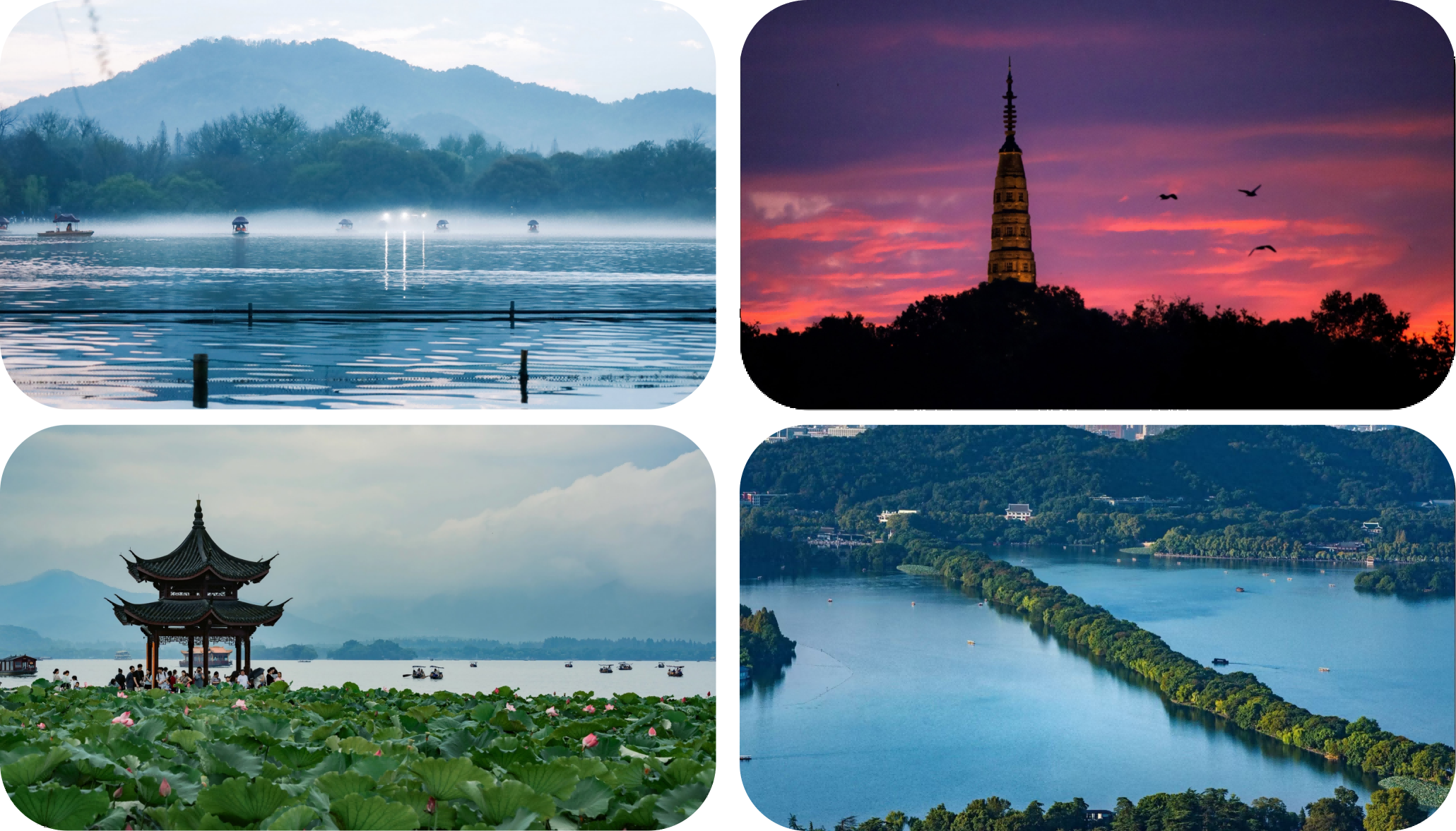
West Lake is a freshwater lake located in Hangzhou, Zhejiang Province, with an area of approximately 6.39 square kilometers. Surrounded by mountains on three sides and adjacent to the city on one side, the lake water is clear and shimmering. The Ten Scenes of West Lake, such as Three Pools Mirroring the Moon and Dawn on Su Causeway, each have their own unique charm. Since ancient times, the beauty of West Lake has been a constant source of inspiration for poets, scholars and artists. Literati like Bai Juyi and Su Shi left eternal poems here, while buildings such as the Broken Bridge and Leifeng Pagoda have witnessed countless legends. Today West Lake remains a popular resort for leisure and sightseeing. Wandering along the lake, one can both feel the tranquility of the lake and mountain scenery, and experience the profoundness of history and culture. The West Lake Scenic Area was rated as a national 5A-level scenic spot in 2007 and officially inscribed on the World Heritage List in 2011.